Monday, 7 September 2020

Impingement Syndrome. What is it and how is it treated?

Impingement Syndrome is a medical condition, where the bones of the shoulder intrude or ‘impinge’ into the tendons or the bursa; the liquid filled, bag like structures, acting as a shock absorbing medium between the bones and muscles around a joint. The human shoulder joint is the most common joint that is affected by this condition.


Signs & Symptoms:

Persistent pain, along with loss of movement at the joint and a feeling of weakness, are the most common signs. Any overhead movement of the shoulder or even lying down and putting weight on the shoulder, can cause severe pain. Other symptoms include a grinding, popping sound on moving the joint. If left untreated, it causes inflammation of the bursa and the rotator cuff tendons, and even leads to tearing of the tendons.

Causes:

Age. People above 50 and older are more likely to have this condition. Though younger people involved in movement intensive sporting activities are also susceptible.

Any injury caused to the shoulder area.

Muscle imbalance. All muscles have a mechanical balance for their optimal function and when this is disturbed, i.e. muscles are too loose or too tight, problems start. 

Neurological problems. Current studies have revealed that neural structures and mechanisms and anything that disturbs them, contribute to pain and shoulder dysfunction.

Bone spurs i.e. projections that develop along the bone structure, usually in the joints, can rub into the surrounding tissue causing irritation and inflammation.

Treatment:

The most important objective here should be pain reduction and restoration of functionality, taking into account the age, general health and activity level of  the patient. Treatment is divided into two types, Non-Surgical and Surgical, with preference given to non-surgical.

Non-Surgical:

Rest - complete rest and limited activities of the shoulder and the arm.

Non-Steroidal Medication - to reduce inflammation and pain and encourage healing.

Physical Therapy - to improve the range of motion of the affected area by means of gentle exercises like stretching relieving stress and pain.

Steroid Treatment - when the above three methods are not successful, doctors may suggest treatment with steroids. This is injected directly into the affected area, usually the bursa, and can relieve the pain. 

Stem Cell Treatment - these are cells with the specialised ability to develop into a completely different type of cells. They are extracted from the patient’s body, harvested and injected into the affected area, where they grow and transform into healthy cells, boosting the healing process.


Surgical:

This is a method of last resort when everything else is ineffective. The most common is called Subacromial Decompression, where the idea is to reduce the pressure on the rotator cuff and bursa, by creating space between the shoulder joint and the shoulder blade. This is done using an arthroscope, and in joints with an endoscope.

Visit Us: orthobangalore.com
Blog reviewed by: Dr. Banarji B.H
Mail us: bans75@yahoo.com

Friday, 31 July 2020

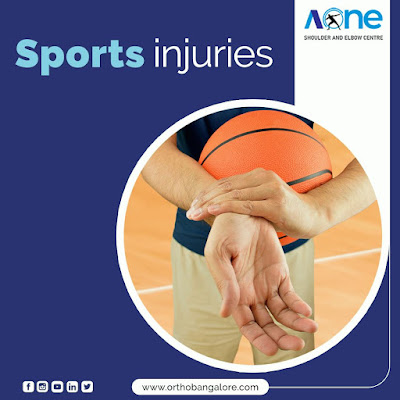
Sports injuries

Sports Injury / Sporting Injury - this is a very broad term and includes just about any injury caused when engaged in sporting activities. Though the benefits of exercise and sports to both the body and mind outweigh the risks involved, injuries do happen and must not be ignored, and even the smallest taken with utmost seriousness..

https://orthobangalore.com/how-to-avoid-sports-injuries

These can be due to: 
  1.  Exerting or pushing oneself too hard, leading to body strain and injuries.
  2.  Incorrect equipment or poor technique or poor application of the techniques.
  3.  A fall or a slip, causing a heavy blow or a joint twist causing muscle strain or damage.
  4.  Or, simply not warming up before the exercise.
In sporting injury management, they follow a rule called the R.I.C.E.R rule, which is basically a first aid for any type of sporting injury. It prevents further injury and when applied correctly and immediately, substantially reduces recovery time.

It stands for - Rest, Ice, Compression, Elevation, Referral.
  • Rest - this is immediate stopping of any activity, specifically to the injured area to prevent further damage. This period can be for immediately, during treatment or afterwards, or all three.
  • Ice - internal bleeding, pain and swelling can be reduced/controlled when the tissue is cooled.  Never apply ice directly to the skin, always cover it with a towel, apply for not more than 15-20 minutes and then remove. Repeat after an hour.
  • Elevation - as the name implies, it is lifting the injured part higher to reduce swelling and bleeding. This decreases swelling decreasing pain. For lower limb injuries, the ankle should be held higher than the hip and 48 hours is the minimum advised time.
  • Referral - this is obvious. If you do not understand the injury or even if you do, immediately refer with a doctor or specialist. Better safe than sorry.
And if you are in Bangalore, you're in luck as the city hosts quite a few specialists in this field.
And Ortho One Orthopaedic Speciality Clinic is one of the most popular and successful in this field. They have a reputation for providing world class care and the best specialists in this field.

https://orthobangalore.com/how-to-avoid-sports-injuries

They can be contacted at:
ORTHO ONE ORTHOPAEDIC SPECIALITY CLINIC,
3 / 4, 8TH MAIN (WATER TANK ROAD),
CHBS LAYOUT, VIJAYANAGAR,
BANGALORE,
KARNATAKA, INDIA.
PIN: 560 040.
PHONE - DR. BANARJI B.H. - 97312 74396
EMAIL   - infor@orthobangalore.com
WEB      - www.orthobangalore.com

https://orthobangalore.com/contact-us
Visit Us: orthobangalore.com
Blog reviewed by: Dr. Banarji B.H
Mail us: bans75@yahoo.com

Tuesday, 18 February 2020

What To Expect During Arthroscopic Shoulder Surgery?

Shoulder arthroscopy is a minimally invasive surgical procedure used to visualize, diagnose and treat various injuries or abnormalities in the shoulder and the space surrounding the rotator cuff. This is done through a small incision in the area through which a thin tubular instrument called Arthroscope that is attached to a small camera is inserted. It helps to get a clear image of the joint on a TV monitor, allowing your surgeon to see all the structures inside your shoulder. He can make a precise examination of joint injury and decide on treatment options for recovery from the condition.

 Shoulder arthroscopy

When Is It Needed?

Experts might recommend Arthroscopy for many shoulder problems such as bursitis, tendonitis, arthritis, impingement, rotator cuff tears, labral tears, and shoulder instability. They will also suggest when there is persistent joint pain, swelling or stiffness in the joint. Using arthroscopy doctors can diagnose and confirm the pain source and treat damage caused to bones, cartilage, ligaments, muscles, and tendons.

What Are The Benefits?

Benefits of arthroscopic shoulder surgery compared with older open surgical techniques include:
  • Minimal scars
  • Decreased pain and swelling
  • Improved motion
  • Quicker functional recovery
  • Fewer risks and complications

How Is Shoulder Arthroscopy Is Performed?

During a shoulder arthroscopy the patient will be given an anesthetic before the procedure. The surgeon will make two or three small incisions to insert the arthroscope and any necessary instruments. The joint is filled with sterile fluid which allows the surgeon to view and diagnose the joints more clearly. 

Once the problem in the location is identified, the issue is rectified using small tools inserted through the incisions. After completing the procedure, the fluid is drained out and the incisions are closed with stitches. Most often the procedures take less than one hour. 


You may be in a sling or a special `shoulder immobilizer' after the surgery. Your expert caregiver will guide you through the post-surgery care and will recommend Rest, icing, and anti-inflammatory medications to help decrease pain and swelling. Most often you can begin light exercise in 1 week. However, return to full activities may take several weeks to months.

Visit Us: orthobangalore.com
Blog reviewed by: Dr. Banarji B.H
Mail us: bans75@yahoo.com

Friday, 6 December 2019

Medical procedure for shoulder dislocation

The shoulder gets dislocated when an injury makes the upper arm bone come out of the shoulder blade socket. The shoulder could be dislocated partially or entirely and would cause severe pain and instability. There are mainly three ways in which shoulder gets dislocated, such as:

    1.Anterior - front of the socket  
    2.Posterior - behind the socket 
    3.Inferior - below the socket

 Shoulder Dislocation

Usually, the doctor would recommend surgery when the dislocation has caused severe damage to the joints or when the non-surgical treatments fail. An orthopedic would suggest surgery for young athletes who has frequent dislocations. Surgery could help improve joint stability and prevent dislocations in the future. 

The most common surgeries performed for shoulder dislocation are arthroscopy and open surgery. These are mainly performed to treat the torn ligaments. 

Arthroscopy is considered to be a minimally invasive surgery that helps to treat problems in the shoulder joint. The doctor will make tiny incisions to insert the arthroscope that shows the inside of the joint on the screen, and then they will correct the issue. The doctors use special pencil-thin instruments while performing arthroscopic surgery. The doctors can get a clear view of tiny details in the bones, tendons, ligaments, and labrum. 

Arthroscopic surgery is performed using general anesthesia. Doctors would perform arthroscopic shoulder surgery for several shoulder problems such as rotator cuff repair, bankart repair for recurrent shoulder dislocation, bone spur removal, removal or repair of the labrum, repair of ligaments, removal of inflamed tissue or loose cartilage, arthroscopic nerve release, arthroscopic fracture fixation, and calcific tendinitis.  

Open surgery 
Open surgery involves one large incision to access the joint. If the shoulder pain persists or if there is any change in the shape of the bones in the joints, doctors would prescribe open surgery. With the help of open surgery, doctors can repair injured tendons, ligaments, and the labrum or address the damage caused to the bones of the joint. 

Repeated injuries will cause bone loss in the glenoid socket, and with open surgery, the doctor would repair with bone graft. Usually, the bone graft is taken from the hip bone, and the doctor would shape it to fit the rim of the glenoid to create a deeper socket. Gradually, the bone graft will get fused to the shoulder socket and forms a solid bone. This could ensure additional stability for the shoulder and will allow the arm bone to be in place. 


The surgery could depend on the severity of damage to the ligaments, bone loss, and laxity of the tissues. Be it arthroscopy or open surgery, the doctor would advise physical therapy and certain medications for a few weeks to make the shoulders stable again. 


Visit Us: orthobangalore.com
Blog reviewed by: Dr. Banarji B.H
Mail us: bans75@yahoo.com

Saturday, 19 October 2019

Shoulder dislocation & surgery

Surgery for severe shoulder dislocation will always be suggested to repair the torn ligaments. It is crucial to correct the position of bones to return the regular movements of the shoulder. A dislocated shoulder is usually caused due to a fall or excessive use of the shoulder wherein the arm bone will come out of the shoulder socket.
https://www.orthobangalore.com/shoulder-dislocation

Symptoms of shoulder dislocation

Various symptoms or signs of the dislocated shoulder are as follows:
  • Severe shoulder & arm pain
  • Unable to move the affected arm
  • Either in the front or back there will be a bump
Treatment for a dislocated shoulder

If the dislocation of the shoulder is severe, it has to be treated immediately. The surgeon needs to get the arm bone back to the shoulder socket. There are mainly 2 types of surgery for a dislocated shoulder.
  • Arthroscopic shoulder surgery - using a slim, pencil-sized tool termed arthroscope and with a tiny cut, the surgeon inserts the arm bone into the socket. This is usually performed after giving general anesthesia
  • Open shoulder surgery - even after arthroscopic shoulder surgery, if the pain continuous then, open shoulder surgery is recommended. Instead of several small cuts, a single cut is made above the shoulder joint. This is performed to repair the injured joints, ligaments, tendons or any other damage on the shoulder joints
Tips to keep in mind post the treatment

Even though the surgery can treat the dislocated shoulder, there are a few tips to do to take care of the shoulder from further injuries such as:
  • Keep ice pack - it is good to keep ice on the shoulder after the surgery as it can give some relief for the swelling and pain. It is advisable to keep the ice pack for 30 minutes for a week or more
  • Use the sling - after the surgery, it is recommended to use a sling for a few days or weeks until the doctor asks to remove
  • Medication - never skip the medicines or pain killers prescribed the doctor. There would be side effects for the medicines, so it is better to consult the doctor on time
  • Exercise - if the doctor has asked for some physical activity, continue doing some simple exercises that could help the movements of hands and shoulders. Stretching and strengthening exercises can bring out good results later
    https://www.orthobangalore.com/shoulder-dislocation
 Never try to get back to the old routine before the doctor's advice, as it will create more injuries and issues to the shoulder.

https://orthobangalore.com/contact-us

Visit Us: orthobangalore.com
Blog reviewed by: Dr. Banarji B.H
Mail us: bans75@yahoo.com

Tuesday, 17 September 2019

Getting Back to Normal After a Shoulder Replacement Surgery

Preparing yourself for an extensive joint replacement surgery can be an intimidating task. If you're considering a shoulder replacement, you should have a closer look at what you can expect throughout the recovery process.


The recovery process begins right away after the successful completion of surgery. The process usually starts with a short stay at the hospital. Your arm will be in a sling, and your incision will be covered with a dry bandage.  

Right After Surgery:

You may feel some pain after surgery, which can be managed with medication to make you feel as comfortable as possible. This will be given either by injection or pump as per the pain severity.

Ice packs will help control pain and swelling when placed on your shoulder. Inhaling profoundly and frequently coughing after surgery can help you to clear your lungs and avoid possibilities of lung congestion. 

Ortho One orthopedic specialty clinic provides you with the luxury recovery suite for ensuring a fast recovery. Our expert doctors will provide you with a list of exercises that you can do to keep your muscles active without damaging the replaced shoulder. This will help you to prevent your elbow and shoulder from getting stiff. 


First 10 Days After Surgery:

Once you have returned home, it is imperative to follow the instructions of your shoulder surgeon, to care for your incision. You may have to use pain medications and anti-inflammatory medicines which helps to prevent blood clots.

Being physically active is essential for faster recovery. When you can move your hand, start making a fist and holding it for five seconds or more and release it. This will enhance your blood circulation and should be done frequently. 

During the next three to six weeks, you need to protect the shoulder so that the muscles can heal. Experts of Ortho One orthopedic specialty clinic will help you with a physical therapy exercise plan for your shoulder. During the first few weeks of recovery, Our physical therapist will teach or help you perform specific exercises to strengthen your arm and shoulder.

1-3 Months After Surgery

In the next few months after the surgery, you'll undergo a physical therapy program including stretches and exercises that are meant to:
  •     Build muscle strength
  •     Increase your range of motion
  •     Protect your new joint
  •     And help you get back to healthy living, pain-free

Taking this part of your rehabilitation seriously is essential. These exercises will be challenging to perform in the beginning but will get more comfortable every day. Around 80% of your normal shoulder function can return over the first few months, but it takes time and effort.

The Next 9 Months

These nine months consist of less intense therapy but are still crucial to the recovery process. If 80% of the function returns in the first few months as we said earlier, the next 9 months can bring the return of the final 20%. Getting the most of your new shoulder will take time, but after a year of recovery, patients can perform all of their normal activities comfortably. 

Shoulder joint replacement surgery is a very successful operation and has an excellent recovery rate. Many patients end up with extremely functional shoulders. They were able to return to the normal activities of their life and low impact sports without pain.


According to the experts of Ortho One orthopedic specialty clinic, the best way to get the most from your new shoulder joint is to take your recovery time seriously and dedicate yourself to the therapy exercises prescribed by your caregiver. 


Visit Us: orthobangalore.com
Blog reviewed by: Dr. Banarji B.H
Mail us: bans75@yahoo.com

Thursday, 18 July 2019

Treatment Options & What Should I Know Before And After Shoulder Replacement Surgery

Multiple Options for Shoulder Replacement Surgery


Many people develop shoulder pain with increasing age and some others experience it due to injury or fracture. Such pain and stiffness in the shoulder gradually make it difficult for the people to survive. To treat such conditions shoulder replacement surgery is the right solution.

shoulder replacement in bangalore

Shoulder replacement surgery is a successful procedure that has helped many patients suffering from severe shoulder joint pain. Many patients get back to the activities they love like playing tennis, swimming, golf, yoga and other personal interests after the shoulder replacement surgery. Shoulder replacement surgery brings great relief from pain and restores strength to the shoulder.

Shoulder Replacement procedure involves removing the damaged shoulder joints or caps and replacing them with artificial implants. If you are struggling with shoulder pain or arthritis, consult Dr. Banarji BH, who is one of the famous and well-experienced Orthopaedic Surgeon in Bengaluru.

And also check out the different options for shoulder replacement surgery :

Total Shoulder Replacement- It is also called traditional shoulder replacement. In this procedure, the damaged joint surface is replaced with a metal ball. Total shoulder replacement is considered to be most reliable for patients with bone on bone osteoarthritis and rotator cuff tendons.

Stemmed Hemiarthroplasty- During a partial or stemmed shoulder hemiarthroplasty, only the humeral head of the arm is removed and replaced with a prosthetic ball. Hemiarthroplasty is suggested when the humeral head is severely damaged and the socket is normal.

Resurfacing Hemiarthroplasty- Unlike a stemmed hemiarthroplasty, shoulder resurfacing does not require the complete removal of the humeral head but only the damage in the humeral head is fitted with a smooth cap-like prosthetic.

Reverse Total Shoulder Replacement- This treatment is helpful for people suffering from severe arm weakness. In this procedure, a metal ball is attached to the shoulder and socket is attached to the upper arm bone.

Things you should know before and after the shoulder replacement surgery 


Before the surgery


Days before the surgery, an Orthopaedic Surgeon may ask the patient to undergo a complete physical examination to determine the general health condition. Weeks before the procedure, a patient needs to quit smoking, drinking, and intake of certain medications. The surgery is done under general anesthesia and may take about two to three hours.

After the surgery 


A patient needs to stay in the hospital for two to five days after the surgery. Most people require around six weeks for recovering.

Pain Management- The patient may experience pain as a part of the natural healing process. Medications are prescribed to relieve from pain and antibiotics are prescribed to prevent infection. Pain management is an important part of the treatment and physiotherapy also begin soon after the treatment.

Rehabilitation- A well-planned rehabilitation program is necessary for the success of shoulder replacement. Physiotherapy is started soon after the surgery. The physiotherapist also suggests some home exercises which is necessary to strengthen the shoulders.


As with any other surgical procedures, there might be slight complications which happen only in rarest cases such as infection, bleeding, and swelling. Such complications can be avoided if you consult an experienced Orthopaedic Surgeon like Dr. Banarji BH. 

To book an appointment call @9731274396.

Visit Us: orthobangalore.com
Mail us: bans75@yahoo.com
Blog reviewed by: Dr. Banarji B.H

Monday, 3 December 2018

Shoulder Arthroscopy for Recurrent Shoulder Dislocation

Sports injury and shoulder dislocation are closely associated. Shoulder dislocation mainly happens because of a sudden lifting of heavy weights or twisting the shoulder in a wrong direction or due to a fall. Being one of the most mobile joints of the body, the shoulder often gets dislocated. The upper arm bone that is humerus, pops out of the shoulder ball socket.

https://www.orthobangalore.com/shoulder-dislocation

Surgical or non-surgical process


Primary dislocation can almost always be reduced by manipulating the joint back into its position under anaesthesia. Surgery usually needed if the dislocation is impacted or if there is a fracture along with dislocation.

A shoulder dislocation can become recurrent due to a tear in the glenoid labrum (a ligament which stabilises the shoulder joint), if the dislocation happens again, then it is always better to repair the labrum.


Which is the most recommended surgical technique conducted by doctors?


Previously open surgery was the only surgical technique conducted by surgeons. But surgery  has gone to some other end with the help of technology. Arthroscopy or key-hole surgery is a process in which smaller incisions are made near the shoulder area. An arthroscope (a small camera) is inserted in the targeted area which provides images on a video screen. The surgeon can view the condition inside the damaged part on the monitor and repair the damaged tissues and ligaments simultaneously. A suture anchor either  metal or biodegradable is  inserted and ligaments are sutured back  to the native bone. Everything is done through key holes using pencil tip sized camera and miniature instruments.


Why arthroscopy is best to treat recurrent shoulder dislocation?

  • Small incisions (Key hole) are made thereby no blood loss.
  • Risk-free surgery
  • Patients recover faster as small incisions are made.
  • Short stay in the hospital
  • So patient will be back to work at the earliest.

Dr.Banarji BH is known best for his amazing Shoulder dislocation treatment in Bangalore. Shoulder Arthroscopy is one of his most experienced fields. Since years he has been providing high-class services to his patients, he has treated several sportsmen for shoulder dislocations and helped them to return back to sports. So if you are looking for a surgeon who is reliable for shoulder arthroscopy in Banglore, Dr. Banarji BH is the one for you!

https://orthobangalore.com/contact-us
Visit@ orthobangalore.com
Mail us: bans75@yahoo.com
Book appointment: orthobangalore.com/book-appointment

Friday, 12 October 2018

Celebrate World Arthritis Day – October 12th

Arthritis is a very common condition in today's world. There are millions of people who suffer from such a disease. Spreading awareness of the seriousness of arthritis is the thing that should be done first. So, the 12th of October 2018 will be celebrated as World Arthritis Day throughout the world to help people get to know more about this condition that is disrupting normal life and routine. On this day, we try to raise awareness against Rheumatic and Musculoskeletal Diseases amidst the public and even the community belonging to medical field. This day was established in the year 1996 with the motive that is mentioned above by the Arthritis and Rheumatism International (ARI). From then on, the 12th of October is celebrated as World Arthritis Day.


The main objective of World Arthritis Day

  • To spread awareness against the condition amongst the people suffering from arthritis, the medical community as well as the general public.
  • To make the decision makers aware of the seriousness of the condition and to help and encourage them to make and follow steps that can curb the condition amongst the people.
  • To make sure that the group of people suffering from arthritis is aware of the disease and the wide network of care and support system that is available.

https://www.orthobangalore.com/knee-arthritis

What is Arthritis?

Arthritis basically is the inflammation of joints. Arthritis is usedin the description of many diseases that causes issues in the joints and the tissues surrounding it and at times the other connective tissues in the body. The common forms of arthritis include rheumatoid arthritis, shoulder arthritis and osteoarthritis . Shoulder arthritis can be very painful as it affects the shoulder joint. It causes damage to the muscles, tendons, ligaments and joints and limits the range of movement. Joint replacement surgery and arthroscopy are the common surgical treatments employed.

Are you suffering from any sort of arthritis? Don't worry. Dr Banarji B.H is here for your help. He is known as the best shoulder specialist in India. He has his practice in Orhto One Orthopaedic Speciality Clinic, Ortho Bangalore Shoulder Center and Sakra World Hospital. Book your appointment today and get the first class treatment for arthritis. Get the best arthritis treatment in India from Dr.Banarji B.H.
https://orthobangalore.com/contact-us

Visit Us : orthobangalore.com
Mail Us : bans75@yahoo.com
Book Your appointment Here : orthobangalore.com/book-appointment

Thursday, 19 July 2018

All you need to know about Frozen Shoulder

Just like any other orthopaedic problems, shoulder joint has also shown a great increase in the recent years. The condition comes with extreme pain in the shoulder. One needs to be aware of the condition to get proper frozen shoulder treatment. Here is a brief description about Frozen Shoulder.


What is a frozen shoulder?


Frozen shoulder or adhesive capsulitis, is a condition where the person suffers from extreme pain and stiffness in the shoulder joint. Frozen shoulder develops when the shoulder capsule, which is the connective tissue around the shoulder joint, becomes thicker and more rigid, thus restricting the movement of the shoulder. The frozen shoulder comprises 10-15 per cent of all shoulder-related issues. Frozen shoulder is less likely to be seen in men. It is comparatively seen more in women. Studies show that almost 70 per cent of the frozen shoulder cases are observed in women.


What are the main causes of frozen shoulder?


Frozen shoulder can be caused by a variety of reasons. The main ones being,

  • Frozen shoulder can occur due to a result of surgeries and traumas where the shoulder will be set in such a way that it remains immobilized for a long time.
  • Infections, inflammatory or degenerative states also play a great role in leading to the condition called frozen shoulder.
  • Age is also a factor leading to the condition. The age group, especially between 40 and 60 has higher risks of suffering from a frozen shoulder.
  • Women who are already suffering from conditions like thyroid or diabetes are more prone to a frozen shoulder.
  • As mentioned before, any factors leading to a long period of shoulder immobility will increase the risk factors of being succumbed to a frozen shoulder.
  • Diabetes is also considered as a reason for frozen shoulder.
  • Hormonal Imbalance, lethargic lifestyle, and weak postural muscles increase the risks of frozen shoulder in women.


What are the symptoms of frozen shoulder?

  • Swelling in the shoulder caused by lack of movement.
  • Stiffness and pain in the shoulder 

Frozen shoulder treatment in Bangalore


Timely treatment, proper evaluation of the condition and physiotherapy can cure frozen shoulder. Treat your frozen shoulder under the best group of orthopaedic surgeons in the country. Yes, Ortho one Orthopaedic Speciality Clinic, headed by the very reputed orthopaedic surgeon specialised in Shoulder arthroscopy and sports medicine, Dr.Banarji B H, provides intensive care and treatment supported by modern medical technologies at Orthopaedic hospital in Bangalore. Hurry up, book your appointment now and get your frozen shoulder treated.


Visit us @ orthobangalore.com
Mail us: bans75@yahoo.com

Wednesday, 16 May 2018

The best treatment for your Shoulder impingement

The most common condition called Shoulder impingement syndrome is mainly seen in adults at their old age. The condition is closely associated with rotator cuff tendinitis & shoulder bursitis. These conditions either may occur alone or jointly.

A group of muscles and tendons that attach the upper arm bone to the shoulder is called a rotator cuff. It helps in lifting and rotating the arm. The rotator cuff is located under the top of the shoulder called Acromion.

If a person suffers from shoulder impingement, the rotator cuff catches/rubs against the acromion. While lifting the arm, the space between the rotator cuff and acromion narrows that simultaneously increases pressure. This elevated pressure inflames the rotator cuff, leads to impingement.


Symptoms of impingement syndrome:

  • Experiencing a sudden sharp pain in the shoulder when lifting the arm overhead or backward.
  • Dull and constant pain in the arm
  • Pain radiates from front of the shoulder to the side of the arm
  • Pain gets worse at night times
  • Arm or shoulder weakness
  • Shoulder impingement is diagnosed with the physical examination. 
  • Ultrasound will support to show the rotator cuff injury.
  • MRI scan may be recommended to see the exact problem 

Impingement syndrome treatment

The prime goal of the treatment is to reduce pain and bring back the shoulder function. However, the treatment is planned based on the patient’s age, general health etc. Generally, the patient is advised for non-surgical treatment for shoulder impingement syndrome.

Rest: The doctor will advise the patient to take a complete rest by avoiding heavy activities like lifting the weight, giving strenuous work to hand etc.

NSAIDs: The patient will be advised on non-steroidal anti-inflammatory drugs to alleviate pain, stiffness.

Physiotherapy: The physiotherapist as per the doctor’s advice will teach mild exercises for shoulders to restore its activity and strengthen muscles.

Steroid injection: Cortisone injection is administered to the patient into the bursa beneath the acromion to relieve pain.

Stem Cell Treatment: Stem cells, extracted from high density-area is harvested and injected into the infected area, and they automatically transform into the damaged cells and heals naturally.


When all the primary treatments fail to alleviate pain, finally, the patient is recommended for an Arthroscopic shoulder surgery.

The prime goal of an arthroscopic shoulder surgery is to create an adequate space for the rotator cuff. By removing the inflamed portion of the bursa, space is acquired. Sometimes, a part of acromion also removed which is called as Anterior acromioplasty.

A fluid is injected into the patient’s shoulder to inflate the joint to view the inside clearly. Few incisions are made around the shoulder and with the help of a small camera called “Arthroscope” and other surgical instruments the procedure is performed. With the support of arthroscope, the surgeon will handle the instruments to remove the defected areas.

Dr. Banarji B.H is an ace surgeon in Arthroscopic shoulder surgery in Bangalore who is specialized in sports medicine and arthroscopy.


Visit us @  orthobangalore.com
Mail us : bans75@yahoo.com
Book an appointment: orthobangalore.com/book-appointment

Monday, 16 April 2018

Shoulder Replacement Surgery To Restore Your Movements

The effortless swinging of your hands and enjoying each move you make is for a reason a great chance of bliss and joy when you have been troubled for long by the severe pain and less flexibility of your shoulders. Fret not, for Ortho One Orthopaedic Speciality Clinic brings in the best services for you, being the best Shoulder Specialist India has ever seen.

Shoulder Joint Replacement in Bangalore


You'll need a replacement surgery if,

  • Shoulder movements are too stiff and affects the motion.
  • Your daily routines including sleeping affected by a severe and painful spasm.
  • The prevalent medical conditions of rheumatoid arthritis, osteoarthritis etc.

The well-experienced team of surgeons at Ortho One Orthopaedic Speciality Clinic ensures that your health is well maintained through the effective surgical procedures and the shoulder replacement surgery has been found to be of great relief to a large number of patients who approach us for the perfect comfort and happiness they' ve always craved for.

Among the 4 types of replacement surgeries are,


  • Total replacement surgery- a metal ball with a stem and a plastic socket replaces the joint
  • Stemmed Hemiarthroplasty- head of the humerus bone is replaced by a metal ball.
  • Resurfacing Hemiarthroplasty- The joint surface of the humeral head is replaced by the cap- like prosthesis without a stem.
  • Reverse Total Shoulder Replacement- The plastic socket is attached to the upper arm bone and a metal ball is attached to the shoulder bone. 

Shoulder Replacement Surgery India

After the surgery, there will be a slight pain for the patient and that is quite obvious. Being the best providers in shoulder joint replacement in Bangalore, we try our level best to bestow the genuine care and medical supports before and after the surgery.

Every day you wake up and go around doing all your routines mostly of which the ball-and-socket joint of the shoulder could only provide. Shoulder replacement is highly effective in resolving most of the allied issues and to retrace back your life, Ortho One Orthopaedic Speciality Clinic stands by your side for the same!
https://orthobangalore.com/contact-us
Mail Us @ drbanarji23@gmail.com
Visit Us @ orthobangalore.com

Thursday, 28 December 2017

What are Rotator cuff tears and its cause?

Anyone who played a sport has at some point of time injured their shoulder at least once. Shoulder injuries are common among people who play certain sports and people whose work entails extensive use of arms. The repetitive, intensive and routine movements of arms result in shoulder pain.


Shoulder Injury types


The commonly known types of shoulder injuries are:
  • Rotator cuff tears
  • Rotator cuff Tendinitis
  • Dislocated shoulder
  • Slap tears
  • Frozen shoulder
  • Shoulder Arthritis

What are Rotator cuff tears and its cause?


Rotator cuff is a group of four muscles and tendons that stabilize the shoulder joint. The injury could be a partial tear or a complete tear of tendons. Injury to rotator cuff could happen due to extensive use of arms or due to degeneration and ageing.


Symptoms of Rotator cuff tear 


People tend to ignore minor injury causing tear and over time the pain aggravates and result in frozen shoulder or arthritis which might require a surgery for relief. Essential relief measure should be sought soon after the injury before the condition worsens.
The common symptoms of a tendon tear are: 
  • Difficulty in lifting objects 
  • Pain in the shoulder 
  • A clicking sound while moving the arm 
  • Unable to raise the arm 
Diagnosis of shoulder injury could be done by a thorough physical examination by a physician. In certain cases the doctor may suggest MRI scan, Ultrasound and X-rays.

Treatment for Rotator cuff tears


Initial relief from Rotator cuff tears could be sought through medication to reduce pain and swelling. In more severe cases patient might need to undergo surgery for permanent relief. The patients now mostly opt for Arthroscopy which is minimally invasive where a small tube with a camera is inserted into the body through an incision. The conventional surgical procedures followed are Open and min-open. Benefit of undergoing Arthroscopy is the shorter recovery time.

Ortho one, Bangalore for Orthopedic treatment


Ortho one is acknowledged for their remarkable achievements in the treatment for shoulder joint pain and surgery for shoulder injuries under the tutelage of Dr.Banarji BH who is the most sought after orthopedic surgeon specialized in the field of Arthroscopy and sports medicine. At present he is officiating as senior consultant orthopedic and Head of shoulder and upper limb division at Sakra World Hospital, Bangalore. He is also Associate professor at MS Ramaiah Hospital and is the owner of the private clinic Ortho one situated at CHBS Layout, Vijaynagar, Bangalore.

For more,

Drop a mail drbanarji23@gmail.com

Thursday, 26 October 2017

Shoulder Pain Causes and Treatments


The major cause for shoulder joint injuries is due to vigorous athletic activities like cyclical, overhead motion that involves swimming, tennis, cricket, and weightlifting. Shoulder injuries can also happen even during normal daily activities like washing clothes, hanging curtains and trimming grass.

The problems of shoulder injuries are not always associated with bones but can be with ligaments, muscles, and tendons. Usually, steady pain, weakness in the arm are felt and also limits joint motion. At a final stage, surgery is recommended.


Symptoms Of Shoulder Injury

  • A weakness in the shoulder
  • Pain and gentleness in the shoulder
  • Pain while sleeping
  • Unable to move the shoulder as usual

Different problems that can effect Shoulder


Instability: The structures surrounding the shoulder joint do not synchronize to the ball within the socket and joint is too loose and hence it causes the change in position which is called shoulder subluxation. The dislocation occurs when the joint comes completely out of space.

Impingement: It is the over rubbing of the shoulder muscle touching the top part of the shoulder region. This is due to the activities like excessive, repetitive shoulder motion.

Rotator Cuff- tendinitis/ tear-: The rotator cuff is the group of four tendons and muscles that surround the shoulder joint. they stabilize and assist the joint during activities like throwing and carrying weights, The shoulder gets restless and starts to bear the strain and leads inflammation of these tendons called rotator cuff tendinitis, an injury or degeneration can rupture them and shoulder will be lose the strength to raise the arm.


Shoulder Pain Care


After the surgery dressing will be done to cover the incisions and it will be removed after two to three days. In case of Shoulder injuries, if they are not strong enough to perform day-to-day activities you definitely have to get consult doctor.

Dr. Banarji B.H is one of the eminent, distinguished and most sought after shoulder surgeon and Orthopaedic Surgeon in Bangalore who can perform key hole surgeries of shoulder and elbow joint. One can avail his services At ORTHO ONE- Orthopaedic Speciality Clinic and also he is a consultant in SAKRA WORLD hospital in Banglore, India.

For more details,


Drop a mail at drbanarji23@gmail.com


Impingement Syndrome. What is it and how is it treated?

Impingement Syndrome is a medical condition, where the bones of the shoulder intrude or ‘impinge’ into the tendons or the bursa; the liqu...